
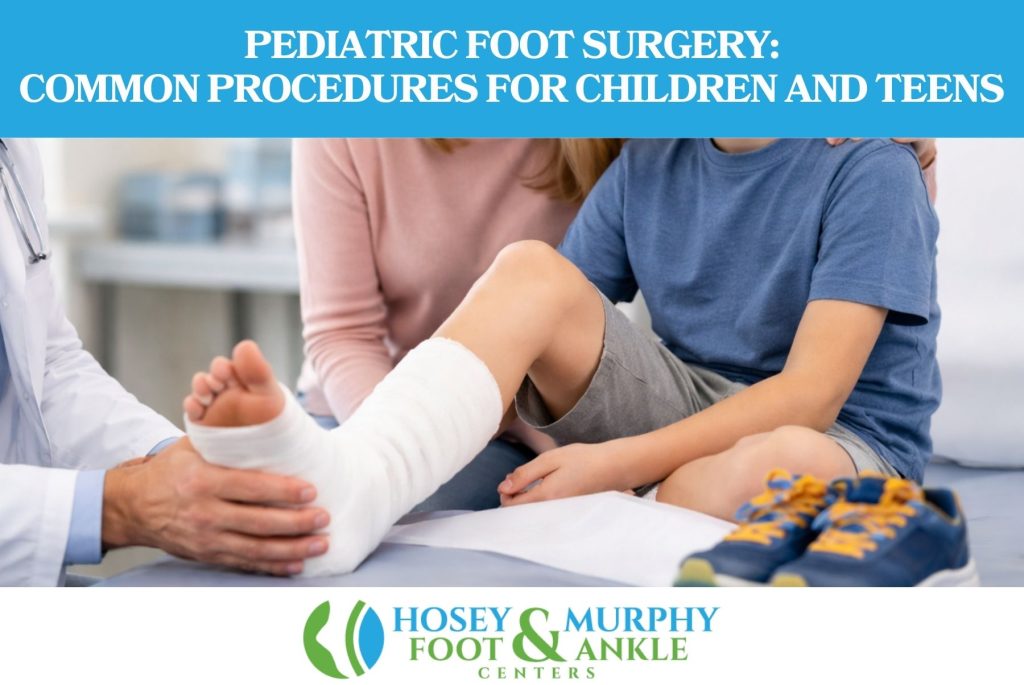
When children experience foot or ankle problems, it can affect much more than just their ability to walk—it can impact their growth, development, confidence, and overall quality of life. At Hosey and Murphy Foot & Ankle Centers, we understand how concerning it can be for parents to hear the words “foot surgery” associated with their child. The good news is that pediatric foot surgery is often highly effective, carefully planned, and performed only when conservative treatments are no longer sufficient.
In this guide, we’ll walk you through common pediatric foot conditions, when surgery may be recommended, what procedures are most often performed for children and teens, and what parents can expect throughout the process.
Understanding Pediatric Foot Conditions
Children’s feet are still growing, which means foot problems can look very different than those seen in adults. Some conditions resolve on their own with time, while others may worsen if left untreated. Pediatric foot surgery is typically considered only after non-surgical options—such as orthotics, physical therapy, bracing, or activity modification—have been explored.
Common reasons a child may need surgical evaluation include:
- Persistent pain that interferes with daily activities or sports
- Structural deformities that worsen with growth
- Gait abnormalities or frequent tripping
- Foot or ankle injuries that do not heal properly
Common Pediatric Foot Surgeries
1. Flatfoot Reconstruction
While many children have flexible flat feet that improve with age, some develop painful flatfoot deformities that do not resolve. In severe cases, surgery may be recommended to realign bones, lengthen tendons, or stabilize joints to restore proper foot structure and function.
2. Bunion Correction (Juvenile Hallux Valgus)
Bunions aren’t just an adult problem. Teens—especially those with a family history—can develop painful bunion deformities. Pediatric bunion surgery is carefully planned to account for growth plates and aims to correct alignment while minimizing recurrence.
3. Ingrown Toenail Surgery
Chronic or infected ingrown toenails can cause significant pain and limit a child’s ability to walk or participate in activities. A minor in-office surgical procedure can permanently remove the problematic portion of the nail and prevent future infections.
4. Tarsal Coalition Surgery
A tarsal coalition is an abnormal connection between two or more bones in the foot, often causing stiffness, pain, and frequent ankle sprains in adolescents. Surgery may involve removing the coalition or stabilizing affected joints to restore mobility and reduce pain.
5. Achilles Tendon Lengthening
Children with tight Achilles tendons—often seen in conditions like toe walking or certain neuromuscular disorders—may benefit from a surgical lengthening procedure to improve walking mechanics and prevent long-term complications.
6. Fracture and Sports Injury Repair
Active children and teens are prone to sports-related injuries. When fractures or ligament injuries do not heal properly, surgical intervention may be necessary to ensure proper alignment and long-term foot health.
What to Expect Before and After Surgery
At Hosey and Murphy Foot & Ankle Centers, pediatric care is always family-centered. We take time to explain the diagnosis, review imaging, and discuss all treatment options with parents and patients.
Before surgery, your child may undergo:
- X-rays or advanced imaging
- Gait analysis
- Pre-surgical planning tailored to growth and development
After surgery, recovery may include:
- Temporary immobilization (boot or cast)
- Physical therapy
- Gradual return to school, sports, and activities
Our goal is always to help your child heal safely and return to an active, pain-free lifestyle.
Pediatric Foot Surgery: Frequently Asked Questions
Q: Is foot surgery safe for children?
A: Yes. When performed by experienced foot and ankle specialists, pediatric foot surgery is very safe. Procedures are carefully planned to protect growth plates and support healthy development.
Q: Will my child need surgery right away?
A: Not usually. Surgery is typically recommended only after conservative treatments have failed or if the condition is likely to worsen without intervention.
Q: How long is recovery after pediatric foot surgery?
A: Recovery time varies by procedure but often ranges from several weeks to a few months. Your provider will give a clear recovery plan and timeline.
Q: Will my child be able to play sports again?
A: In most cases, yes. Many children return to sports stronger and more comfortable after proper healing and rehabilitation.
Q: Are there long-term effects from pediatric foot surgery?
A: The goal of surgery is to improve long-term foot function and prevent future problems. Most children experience lasting benefits when surgery is done at the appropriate time.
Compassionate Pediatric Foot Care You Can Trust
At Hosey and Murphy Foot & Ankle Centers, we are proud to provide expert, compassionate care for children and teens with foot and ankle conditions. Our team is experienced in pediatric diagnosis, conservative treatment, and advanced surgical techniques—always with your child’s comfort and future in mind.
If your child is experiencing ongoing foot or ankle pain, we’re here to help.
Contact Information
Clinton Township Office
Hosey and Murphy Foot & Ankle Centers
42550 Garfield Road, Suite 103
Clinton Township, MI 48038
📞 Phone: (586) 263-4411
Harrington Office
21510 Harrington St., Suite 302
Clinton Township, MI 48036
📞 Phone: (586) 468-5445
Sterling Heights Office
Hosey and Murphy Foot & Ankle Centers
44344 Dequindre Road, Suite 420
Sterling Heights, MI 48314
📞 Phone: (586) 275-3000